Center for Social Research Practice and Research and
IAU New Media Research and Application Center's
jointly organized
DIGITAL TRANSFORMATION
and
WORKSHOP ON SOCIAL IMPACTS;
October 11, 2017 at
Istanbul Aydın University was held…
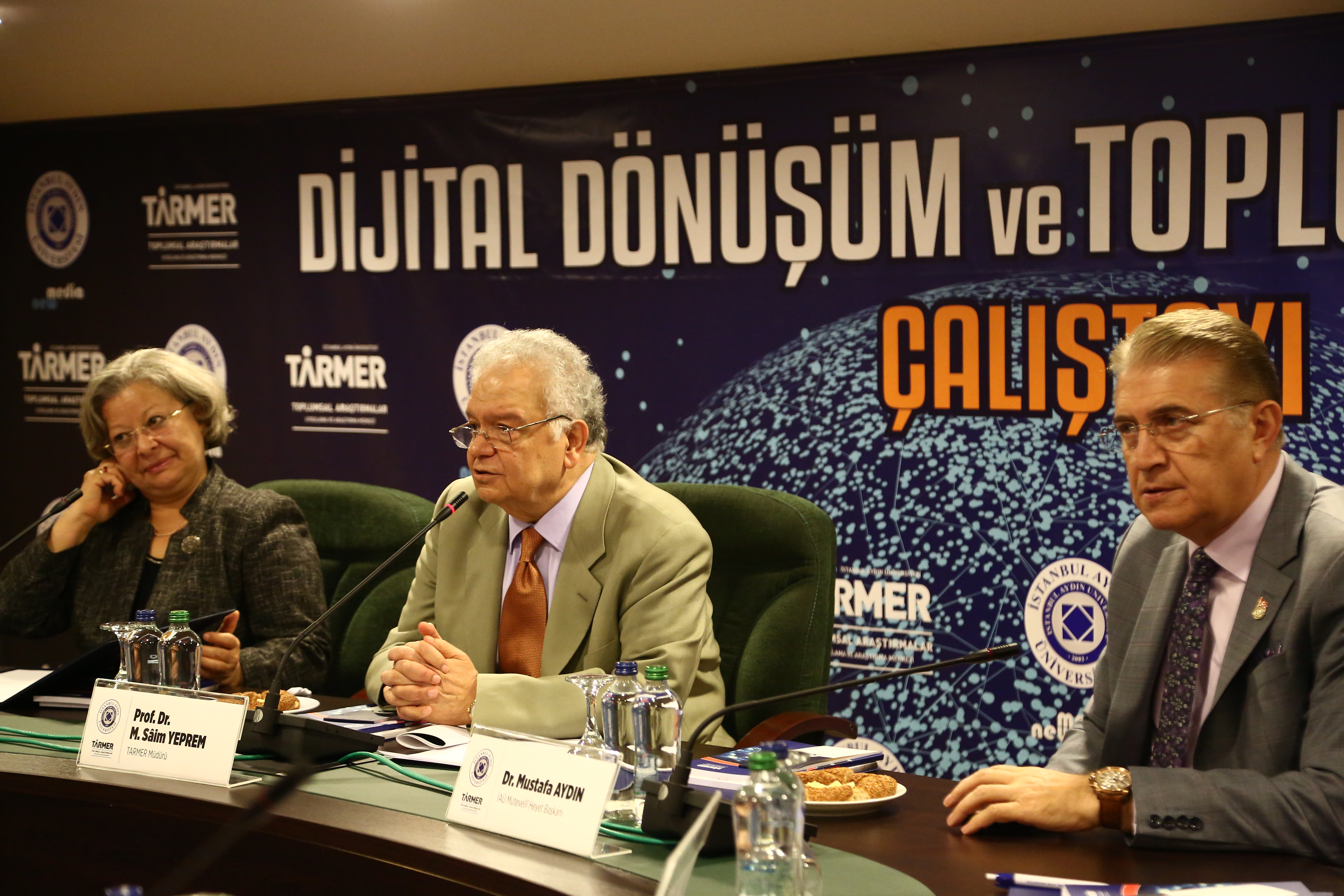
With the contributions of 40 speakers from Istanbul and outside Istanbul, the event continued throughout the day. In the first session, topics such as “What is Digital Transformation, Digital Culture (Techno-Culture)?”, “Where is Digital Transformation in Our Lives?”, “Do We Have a Chance Not to Keep Up with Digital Transformation?”, “Are We Experiencing a Transition from the ‘Information Society’ to the ‘Consumer Society’, or a Decline?”, “Have We Leaped an Era by Moving from the ‘Analog World’ to the ‘Digital World’?”, and “Are We Able to Benefit from the Digital Transformation Process with a Functional Logic?” were discussed.
Following the approximately 30-minute opening presentation by the President of the Digital Transformation Association and academic, Mr. İsmail Hakkı Polat, the first session continued until 1:00 p.m., after which Expert Psychologist and Academic Dr. Mehmet Dinç delivered his introductory presentation.
Following this preliminary presentation, the main themes addressed by the panelist guests were as follows: “Has Digital Transformation Transformed Us Too?”, “What Has Digital Transformation Brought and Taken Away?”, “Digital Culture, Digital Diseases, and the Future…”
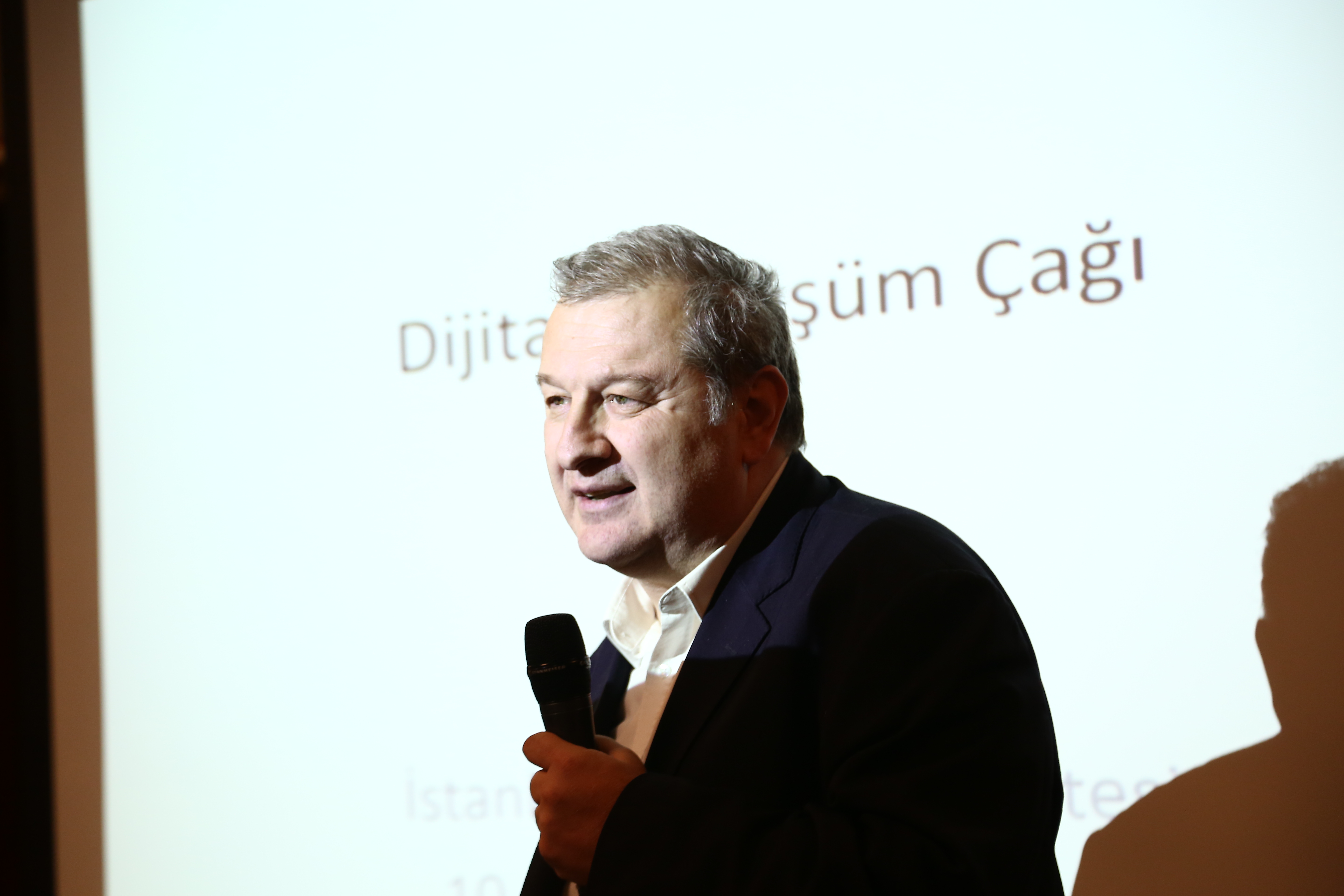
The first presentation of the first session was delivered by President of the Digital Transformation Association İsmail Hakkı Polat; he spoke about the differences between broadcast-oriented traditional media and individual/user-oriented new media, the risks of living a life indexed to the digital world, and the concept of “digital transformation,” which is the common set of technology, internet, and data. Summarizing the point we have reached with developments such as autonomous cars, 3D printers, and bitcoin (digital currency) with colorful slides, Polat said, “The three golden rules for capturing an effective point in digital transformation are: technological production; functional use of the internet network in distribution and marketing; and a data-oriented management model.”
Emphasizing that we need to classify digital concepts as technology, application, and culture, İsmail Hakkı Polat stated that seeking solutions with an interdisciplinary structure is inevitable.
Among the speakers who contributed in the first session, Sociologist Dr. Nebiye Konuk from Sabahattin Zaim University pointed out that, despite this rapid transformation, the “human factor” must be taken as the basis, noting that problems in identity formation processes through virtual platforms stem from a lack of education related to media literacy. Konuk also stated that, despite all the moving images in this process, we are facing a problem of “human loneliness,” and drew attention to the lack of legal infrastructure in the digital sphere as an important issue.
President of the International Social Media Association (USMED) Said Ercan spoke about the problem of using children’s bodies in social media that emerged with capitalism and emphasized that there is a rapid transformation that challenges the field of values, but we do not yet have the infrastructure for it. Emphasizing the need to definitely be active in the field, Ercan said, “We must adopt an approach that produces its own technology. How many people today use smart mobile technology is very important to us. Because it is the technology itself that determines digital culture. Currently, of the 7.5 billion people in the world, 5 billion use mobile phones, and one-third of these are smartphones! In other words, approximately 2.5 billion users are integrated with digital.”
Touching on the topic of artificial intelligence, USMED President Ercan said, “The only rival to human genius is the ever-developing artificial intelligence technology. In 2045, the supercomputer to be produced will, for the first time, exceed the brain capacity of all humanity—the total capacity! And robots smarter than humans will dominate every area of life. The seven areas where smart robots will create change are production, distribution, security and monitoring (drone), consumer products, fast food, the elderly, and driverless vehicles. And today, 70% of Americans are worried about this process.” He added that we must also seek answers to the question, “What will we do if smart robots in the future decide that humans are unnecessary and incompetent?”, giving the Terminator movie as an example.
Digital Relations Manager and author of the book “Digital Crusades,” Okan Özbay spoke of four components as “informatics,” “communication,” “edu-communication,” and “governance,” noting that we should open up the application areas through these basic concepts.
Having carried out effective work for the business world at the international level, IT Specialist Bülent Bedir stated, “Technology production is carried out by humans, and the technology we produce also produces us!” referring to M. McLuhan’s phenomenon of “technological determinism.” Emphasizing that we should focus on the point of the “productive human” rather than consumption, Bedir also gave concrete examples of the realities of the global world…
Assistant Professor Dr. Abdülkadir Yeler of Medeniyet University stated that those who produce technology also determine the terminology, and mentioned the transformation of emoji into animoji.
President of the Association for Social Media and Information Technologies Strategies and Strategist Abdullah Çiftçi stated that cultural change is a whole and that the digital world is evolving towards an intelligence-based ground, and spoke about the concept of “transhumanism.” Noting that those who steer the global order are transforming the human and reformatting them in a completely different way, Çiftçi emphasized, “The digital world; a new state, a new nature!” and the need to produce effective strategies in the face of this reality.
Lecturer Sercan Çalbak of Bahçeşehir University spoke about the phenomenon of “measurability” in the digital sphere and the increase of information; noting that humans must somehow adapt to the digital reality they live in, he said, “The new process will create its own morality.”
Permanent Advisory Board Member of TARMER and Professor at Biruni University, Prof. Dr. Aliye Mavili Aktaş said that the current process is frightening and blocks a fundamental culture such as face-to-face communication, noting that we should focus concretely on the problem of “the human.”
Assistant Professor Dr. Murat Dağıtmaç of Yıldız Technical University stated that an effective mechanism should be established on one of the state channels regarding digital transformation, citing MERNIS as an example. He said that in the rapid transformation process we are in, personality splitting and narcissism have increased, adding, “I agree with Prof. Dr. Aliye Mavili Aktaş; we are indeed faced with a frightening picture. Frankly, I am also concerned about where the process will lead. For the digital system is a structure that knows us better than we know ourselves!”
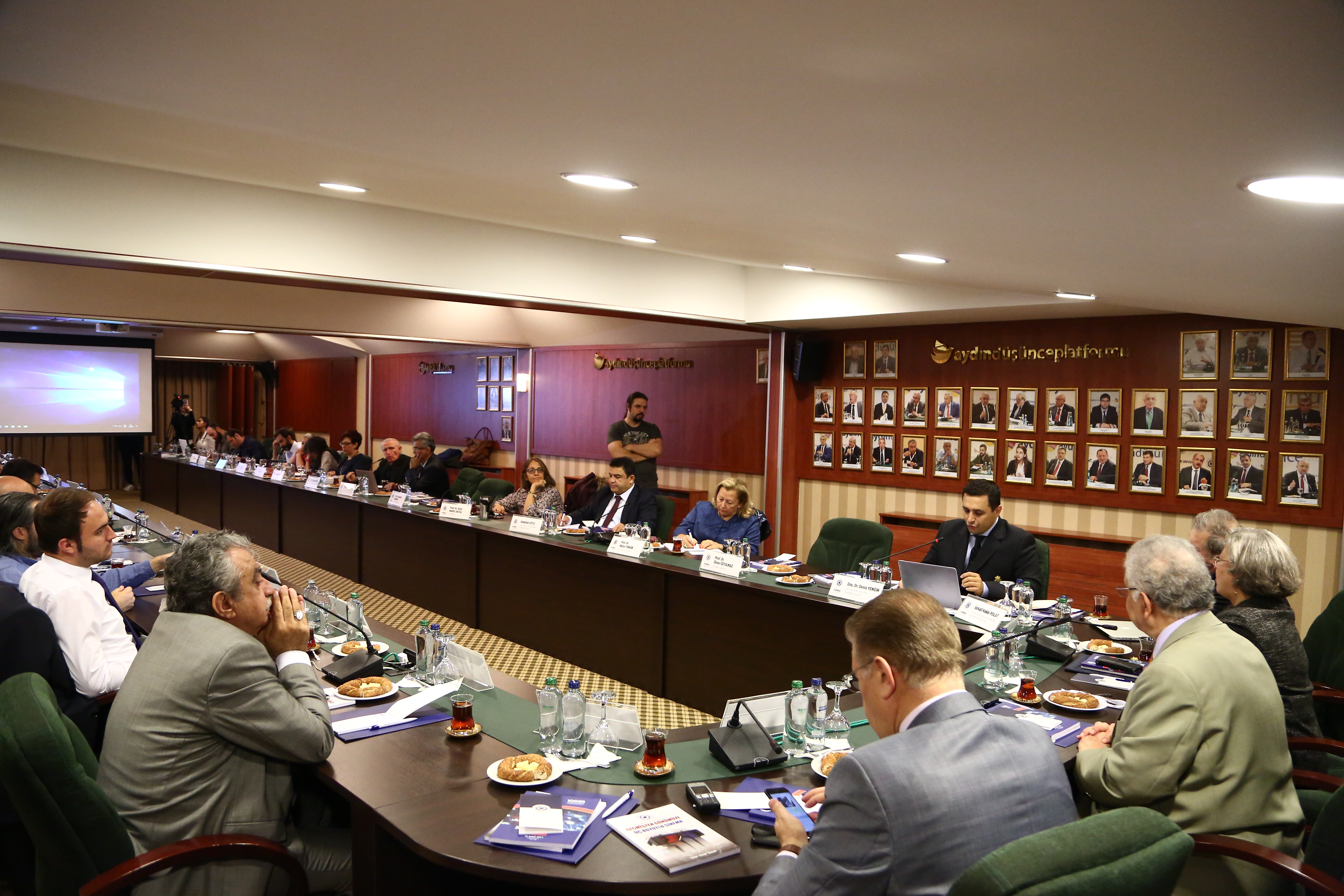
The main presentation of the second session held in the afternoon was delivered by Lecturer at Hasan Kalyoncu University Dr. Mehmet Dinç. Speaking about the difficulties created by rapid change, how internet addiction is now an underestimated phenomenon, and the mood disorders frequently encountered within the current digitalization process, Dr. Mehmet Dinç summarized the threats facing the youth through concrete examples such as gaming, gambling, and sexuality.
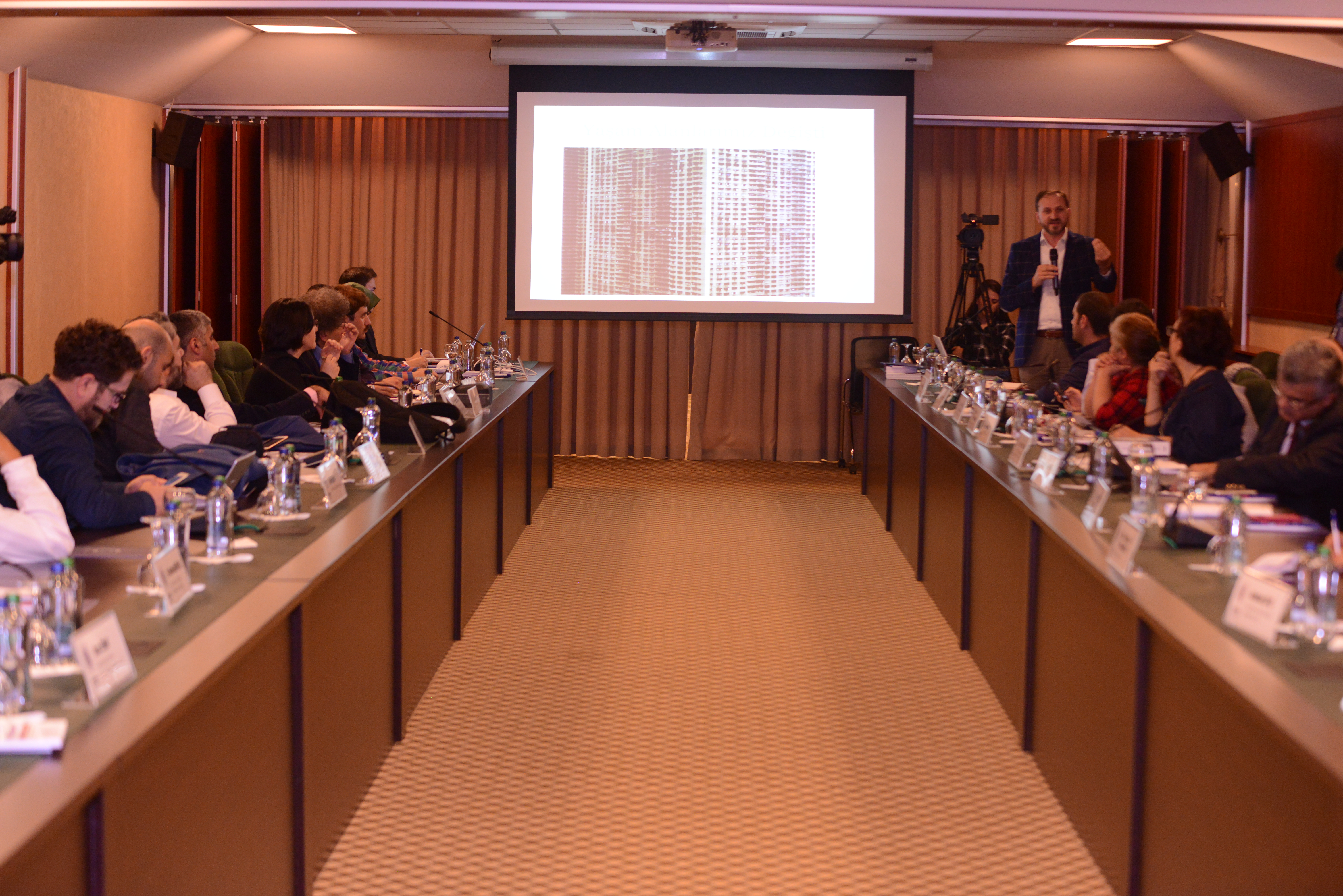
Prof. Dr. Mutlu Binark, Chair of the Department of Informatics and Information Technologies at Hacettepe University gave a concise presentation on how we define new media and emphasized that work in this field must be based on academic research and findings. Saying, “Even the media we call old today was once new according to the conditions of its time.”, Binark noted that we need to conduct clear studies on these different periods and also touched upon the necessity of developing inclusive public policies.
Assoc. Prof. Dr. Özgür Arun, Faculty Member at Akdeniz University provided information on studies concerning “old age” and mentioned the existence of a problematic “age discrimination.” Stating that public policies that will embrace all generations must be produced during the digital transformation process, Arun emphasized that those elderly who do not use technology are subjected to discrimination and face the situation of being unable to benefit from many services.
Prof. Dr. Hülya Yengin of Istanbul Aydın University, Faculty of Communication summarized new studies in the field of communication and touched upon education policies after 1992. Noting that newly opened departments are now directly connected with the digital ground, Yengin also provided information about the work of İLEDAK (Communication Education Evaluation Accreditation Board). Emphasizing the necessity of accreditation of communication education, Prof. Dr. Hülya Yengin stated that communication faculties have embarked on very serious efforts to train qualified communicators needed by academia and the sector.
Prof. Dr. Nuri Tınaz, Faculty Member at Marmara University, Sociologist, serving in SETA’s Society and Media Research Unit summarized how illegal structures worldwide and various terrorist organizations are organized through digital networks and emphasized that serious studies must be conducted on these issues.
Hayriye Ünal, Editor of Hece Magazine, which prepared the “Digital Culture Special Issue,” drew attention to the importance of the question, “Are we agents or passive recipients?”, in the current environment into which digital culture drags us, and pointed out that we must subject our role in the process to a serious inquiry. Stating that they experienced a significant problem regarding terminology while preparing the Digital Culture Special Issue, Ünal also emphasized that the digital transformation process must have a clear language that will end conceptual confusion.
Stating that the infrastructure of such social and global developments should be formed by science and art, Hayriye Ünal said, “We should not only distribute tablets but also produce them; and we must support these healthy production strategies with a serious scholarly and artistic infrastructure.”
Deputy Director of Presidential Digital Communication, İbrahim Sığın spoke about the inequality in how generations encountered technology, starting from the flow of information. He stated that everyone has become a transmitter of information and that even lies have been conceptualized; he also noted that nostalgia is dead for the younger generation. Saying, “After fingerprints, facial recognition has also begun, and we are a society happy to enter this system!”, İbrahim Sığın emphasized that we must analyze the implications of the process well.
Assoc. Prof. Dr. Günseli Bayraktutan, Faculty Member at Giresun Tirebolu University, Faculty of Communication focused on the concepts of convergence and alignment, and by saying, “We have smart phones but not smart cities!”, she stated that we need to build the connections in between.
Assistant Professor Dr. Ali Murat Kırık, Faculty Member at Marmara University and Secretary General of the International Social Media Association summarized the current system based on McLuhan’s concept of the “Global Village” and noted that if individuals cannot share the information they want, a spiral of silence forms. Saying, “With digital labor, we have become social network workers.”, Kırık also emphasized that our rate of adaptation to the process must increase.
Dean of the Faculty of Communication at Üsküdar University, Prof. Dr. Nazife Güngör stated, “Digitalization is a cultural process.” and that in the new period, user-oriented studies have replaced audience-centered studies. Noting that social media also accelerates the flow of information, Güngör stated that there is active interaction between the street and the internet environment.
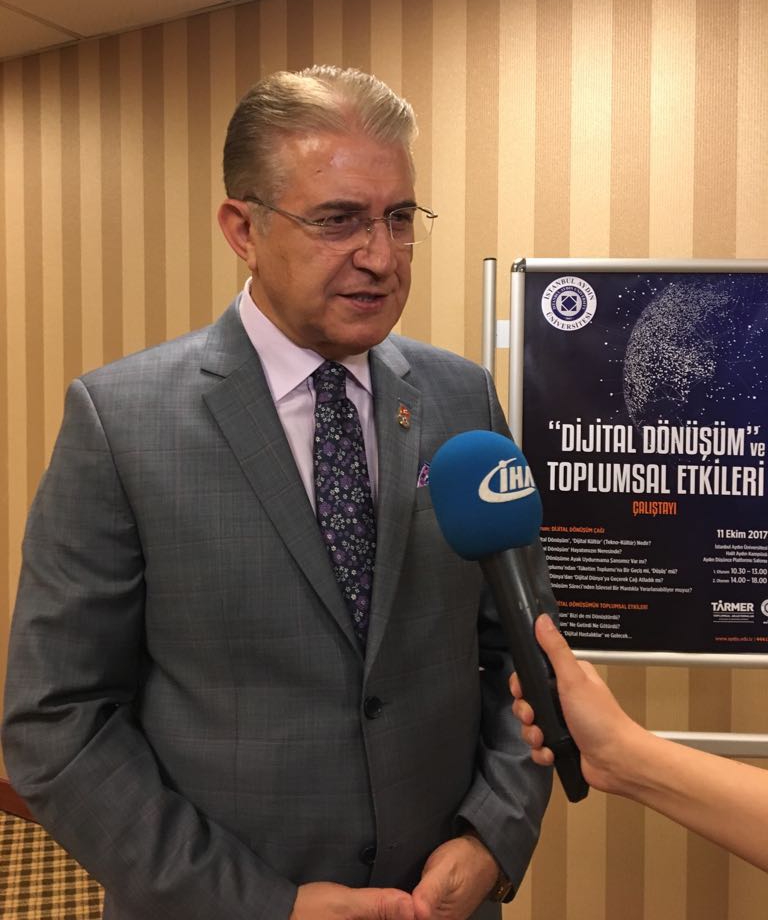
Lecturer at Marmara University and Director of the Digital Life Academy Dr. Bilal Eren also drew attention to the need for an increase in the number of concrete studies in this field and for their reflection to the public…
Researcher–Author Dr. Yalçın Koçak stated that the digital world affects the human’s relationship with truth, geography, and history, and that the virtual often begins to dominate the real. He noted that we should frequently ask, “When was the last time you planted a tree for a contemporary person or petted a cat?”, emphasizing that virtual modes of existence disrupt the connection with real life.
Digital Marketing Specialist Mustafa Kemal Temel drew attention, as someone from the field and sector, to the point of legal lack of oversight and gave examples through the digital currency bitcoin. He also stated that the phenomenon of “speed” in the digital sphere seriously affects human psychology and noted that we must be careful to balance this point.
At the end of the workshop, Assoc. Prof. Dr. Deniz Yenğin, Director of the IAU New Media Research and Application Center and Prof. Dr. Ömer Özyılmaz, Vice Rector of IAU delivered a concluding speech summarizing the points emphasized by the guests and thanked the participants.
Delivering the final speech at the event before the dinner, TARMER Deputy Director Ayten Çalış stated that the topic of “digital transformation” is a macro heading and that many subheadings should be opened and these areas detailed.
“Of the world’s societies and the global mass
being manipulated through the digital world – perception management,”
“the intelligence dimension and cyber space,”
“the full integration of daily lives into the digital system
and the risks that may arise when there is a problem in this system,”
“the virtual life we live, lies produced in the internet environment
and the field of ethical values,”
“our deteriorating psychology and digital diseases,”
“legal lack of control and digital crimes,”
“conceptual confusion and lack of terminology in the digital sphere,”
“the disconnect between academic research conducted in the digital field
and the field.”
Pointing out that such headings must be studied separately, Ayten ÇALIŞ referred to the groups working to bring the idea of a “Ministry of Digital Transformation” to the public and drew attention to the importance of public policies to be produced at this point…
At the workshop, the
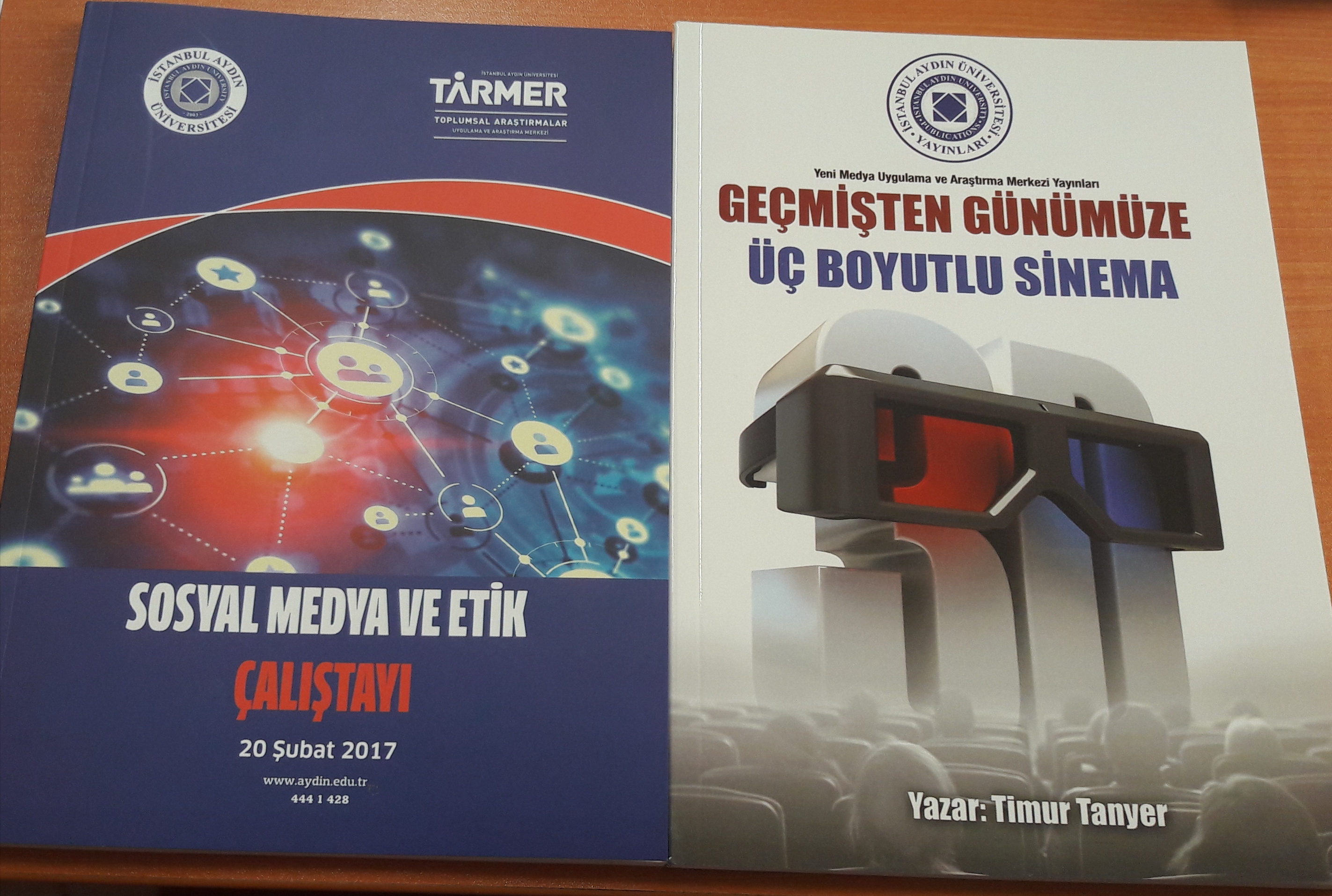
“Social Media and Ethics Workshop” — the previous workshop held by TARMER — in its published form
and a publication of the IAU New Media Research and Application Center,
“Three-Dimensional Cinema from Past to Present” book
were presented to the guests…