Recommended Books for Parents and Educators
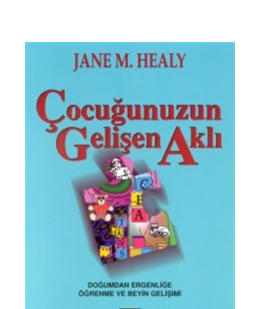
Your Child’s Growing Mind – Jane M. Healy
How can we help our children prepare for the changing world and grow in a way that allows them to adapt? Your Child’s Growing Mind offers solid and creative answers to this timeless question in education. It is a unique guide for parents and teachers, based on the latest scientific findings about the brain and nervous system, aimed at helping children acquire learning skills. The book covers fundamental principles and approaches to assist children in developing language and memory at all stages from birth to adolescence, as well as in acquiring school skills such as reading, writing, spelling, and mathematics.
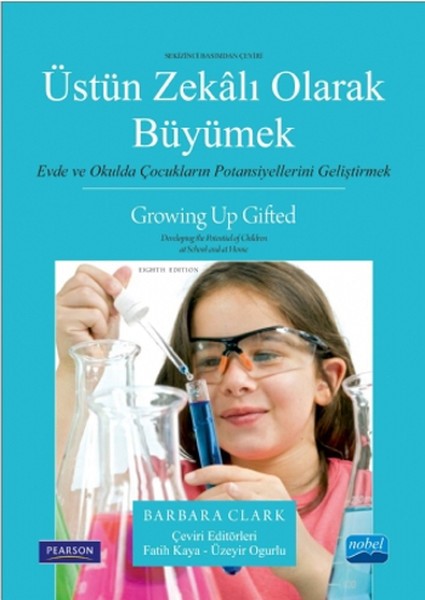
Growing Up Gifted: Developing the Potential of Children at Home and at School – Barbara Clark
This book is about educere, meaning "to lead out" or "to bring forth what is within." It is written to help parents and educators understand and fulfill this important task both at school and at home. The information and ideas presented focus especially on educating children with special talents that need to be developed. The knowledge, ideas, and materials aim to assist educators in guiding these children and enriching their lives.
Whether you are a teacher, preparing to teach in a classroom, or a family member at home, this book provides new insights on learning and teaching models and how to use knowledge to better understand gifted students. These pages offer methods and rationale that can help you support children’s well-being and foster the development of high intelligence.
This book, authored by Barbara Clark, one of the best-selling and internationally renowned experts in gifted education in the United States, has been translated into Turkish through the meticulous work of a competent team. Supported by the latest research data, it is a comprehensive resource suitable as a textbook in gifted and talented education courses.
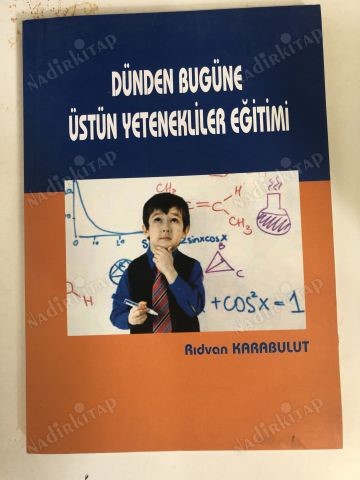
From Past to Present in Gifted Education – Rıdvan Karabulut
In the introduction, Rıdvan Karabulut emphasizes the importance of gifted individuals for society and the country, summarizing the book’s purpose as follows:
"Although the pioneering role of gifted education that began with the Endurun School slowed during the Republic era, efforts to continue it were maintained. This study aims to examine the historical journey of gifted education in Turkey from the pre-Republic period up to 2009."
The book’s content includes:
Chapter 1: Definitions of giftedness
Chapter 2: The place of gifted children in the history of education worldwide, including:
Plato’s philosophy on the importance of superior intellect for social order and governance
Gifted education before the Republic: Endurun School’s foundation, objectives, and educational stages
Gifted education during the Republic era, covering laws, science high schools, special classes, scholarships, educational institutions, and university efforts related to gifted students, with detailed analysis and critique
Chapter 3: A detailed model proposal for Turkey
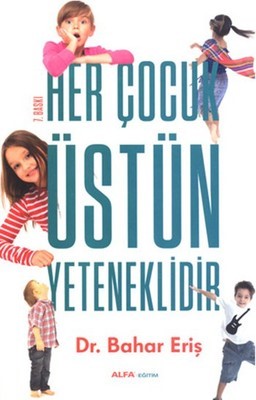
Every Child is Gifted – Dr. Bahar Eriş
In Every Child is Gifted, Bahar Eriş addresses:
How to discover giftedness in children
How to guide talent
The development process of giftedness
The 10,000-hour rule
Expectations from Guidance and Research Centers
What families and teachers can do
Different models applied in gifted education
IQ tests
Hyperactive children and those mistakenly labeled as hyperactive
Gifted autistic children
Available resources on gifted children domestically and internationally
The book aims to raise awareness among all parents. Reviews highlight that Dr. Bahar Eriş systematically addresses the effort to "refine the gem within" gifted children, balancing universal principles with local practices, and distinguishing between ideal and actual conditions, exaggerations, and omissions. It is a new, creative, and useful resource for those who want to nurture a "homemade genius." The book’s humanistic and egalitarian stance also deserves moral praise.
Recommended Books for Children
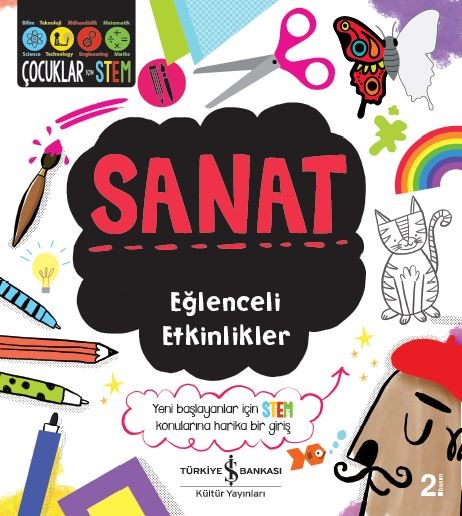
Art – Fun Activities – Jenny Jacoby
Art can be an inspiration for STEM. Similarly, science, technology, engineering, and mathematics can inspire art. Reading the clear explanations in this book and engaging in the elegant and fun activities will broaden the horizons of budding artists and young scientists.
The perfect start to developing a deep passion for STEM fields...
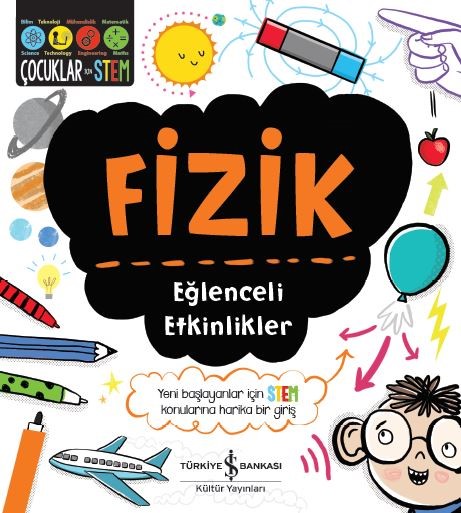
Physics – Fun Activities – Jenny Jacoby
Physics helps us understand how objects behave. Curious young physicists will get acquainted with the fundamental concepts of physics through the clear explanations and fun activities in this book, while developing their creativity.
The perfect start to developing a deep passion for STEM fields...
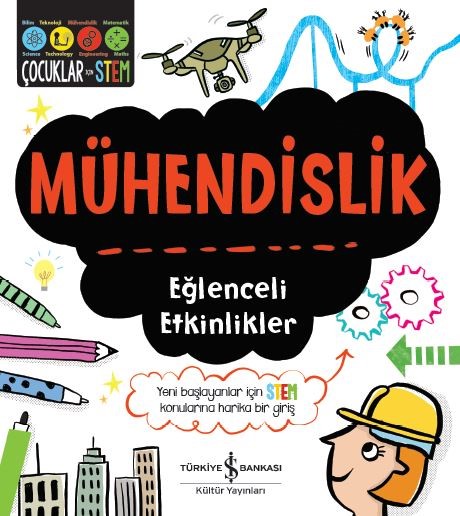
Engineering – Fun Activities – Jenny Jacoby
Engineers bring machines to life. The little curious minds in this field can take their first steps into engineering with the clear explanations and fun activities in this book.
The best start to developing a deep passion for STEM fields...
Who knows, maybe one day this passion will change the world...
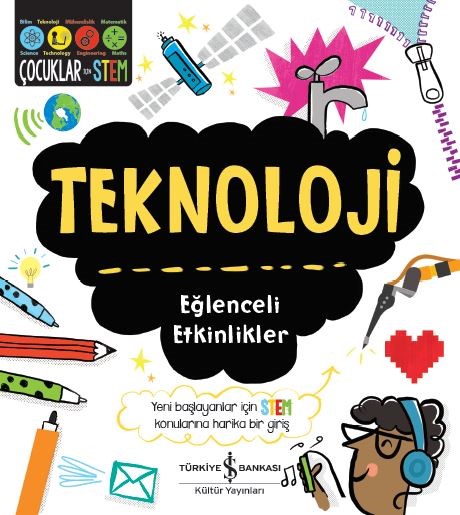
Technology – Fun Activities – Catherine Bruzzone
Technology is science in action. The clear explanations and fun activities in this book will make technology more understandable and enjoyable for young readers.
The most enjoyable start to developing a deep passion for STEM fields...
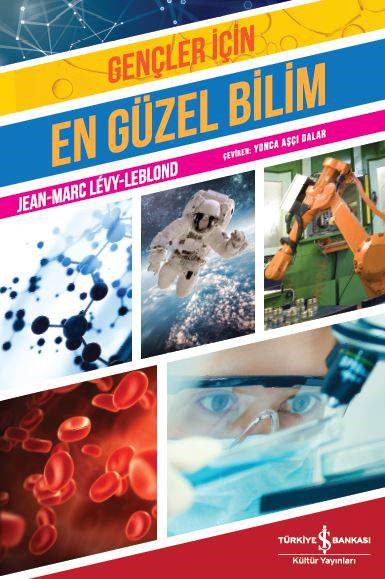
The Best Science for Young People – Jean-Marc Lévy-Leblond (Translator: Yonca Aşçı Dalar)
What science knows and what science is are different things. A physicist, who is an amateur historian and philosopher of science, discusses with his grandson: What is the use of science? What role does it play in society? Why are there different branches of science? What do researchers do in their laboratories? Will science one day explain everything?
Middle and high school students are often not adequately told that scientific activity is closely related to other human practices. Therefore, it is necessary to understand what is unique about science, its evolutionary process over centuries, its place in culture, and its relationships with technology, politics, and even sports.
This dialogue, which contradicts countless clichés, shares not only the questions raised by the branches of science but also the joy they bring.
Jean-Marc Lévy-Leblond is an emeritus professor at the University of Nice, physicist, essayist, and editor. He is one of the most important figures in the cultural approach to science today.
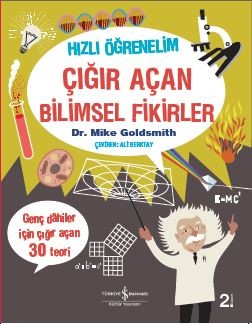
Let’s Learn Fast – Groundbreaking Scientific Ideas – Mike Goldsmith (Translator: Ali Berktay)
30 Groundbreaking Theories for Young Geniuses
Since its inception, science has been guided by brilliant ideas. This book presents the 30 most important scientific discoveries with quickly readable summaries and wonderful illustrations. Exciting small projects also give you the chance to test these theories on your own.
A lively and fun introduction to science and scientific thinking for inquisitive and bright children.
Science governs the world today. The clothes we wear, the food we eat, the buildings we live in, and the TV shows we watch—all rely on scientific knowledge. Science also helps us stay healthy. Thanks to science, we can understand the Universe around us.
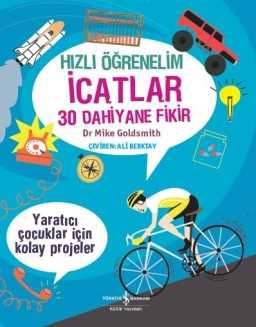
Let’s Learn Fast – Inventions: 30 Brilliant Ideas – Mike Goldsmith (Translator: Ali Berktay)
Quickly learn the facts about the 30 most important inventions that changed the face of the world. Fascinating information is presented in dense summaries with short sentences.
Energetic clusters of information are accompanied by exciting small projects. You can test your new knowledge with these tasks!
Explanatory illustrations on every page make this book a fun guide that invention enthusiasts won’t want to put down.
Look around: How many inventions can you count? You will probably see hundreds of things invented by humans.
Know this: life would be very different without them.
Almost everything around us was invented by someone who saw a need. Think carefully—if you can read these words today, it is thanks to someone inventing the printing press hundreds of years ago. Behind that are even older inventions like paper, ink, and writing itself.
Who invented these?
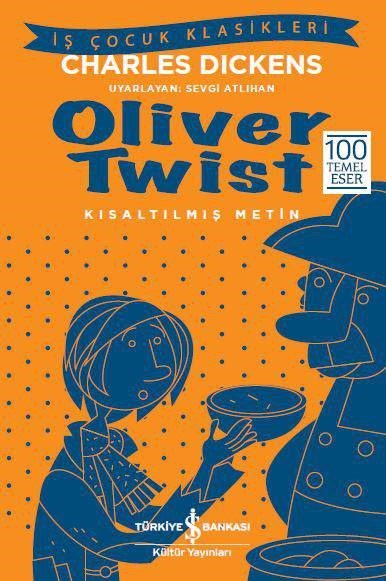
Oliver Twist – Abridged Text
Oliver Twist was truly an unlucky child. Born in a workhouse, he lost his mother at birth. Throughout his childhood, he saw nothing but hunger and misery. Then one day, his life changed unexpectedly. Oliver made the mistake of asking the workhouse manager for a little more food. From that moment on, Oliver Twist’s life turned into a strange detective adventure.
You will read Oliver Twist’s adventures with excitement.
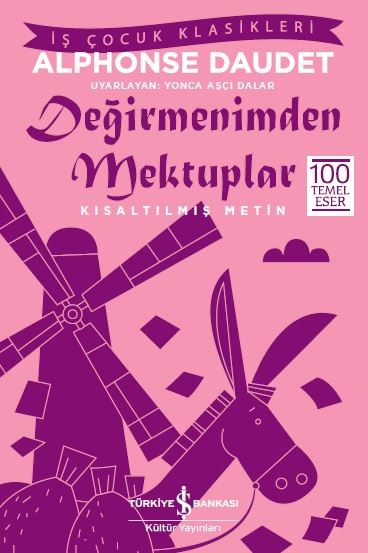
Letters from My Windmill – Abridged Text
This is my favorite among the things I have written. Certainly not because it is a literary masterpiece, but because it reminds me again and again of the best days of my youth, the carefree moments when I laughed heartily, the hours of indulgence without regret, and the faces and friendships I will never encounter again. — Alphonse Daudet
First published in 1869, Letters from My Windmill is the best-known and most-read work of French author Alphonse Daudet. The book consists of memoir-letters written in an old mill in the countryside, each containing a story.
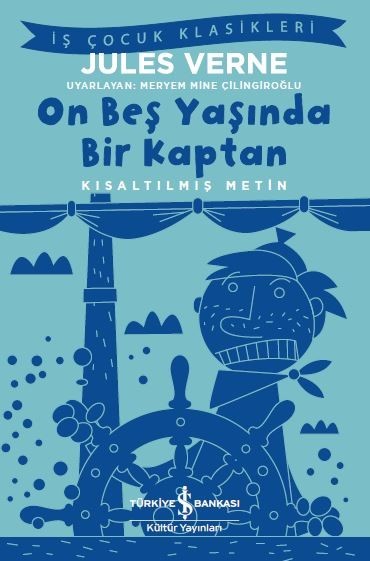
A Captain at Fifteen – Abridged Text
In the days when oceans were crossed by sailing ships, the whaling ship Pilgrim set sail with a strange group of passengers. Alongside professional sailors, there were two ladies, a small child, an entomologist, and a cook who did not seem very trustworthy. While sailing calm waters, they came across a shipwreck. On the overturned ship, damaged in a storm, there was a living dog. As they approached to rescue the dog, they found a group of stranded survivors. No one could have guessed that these rescued men would turn out to be a great fortune for the Pilgrim passengers. However, due to unexpected events, the passengers had to fight a terrifying life-or-death struggle, where knowing who was friend and who was foe became crucial.
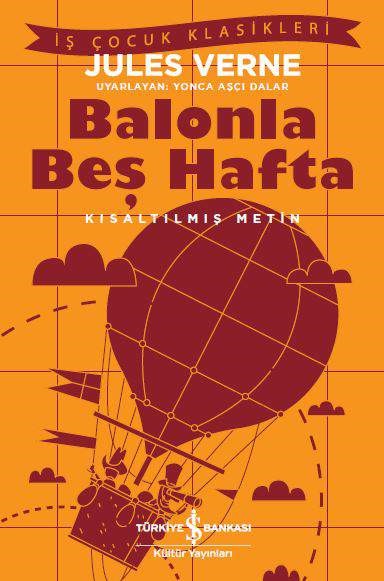
Five Weeks in a Balloon – Abridged Text
At the Royal Geographical Society meeting on January 14, 1862, an announcement created a wave of excitement in the scientific world. Dr. Fergusson planned to cross the African continent from one end to the other.
Of course, this was not a new idea. Many brave explorers had previously set out to uncover the mysteries of the continent, many losing their lives along the way. Some explorers limited their journeys to certain areas and only crossed a few regions.
Dr. Fergusson planned to start from the Indian Ocean, cross the continent, and reach the Atlantic Ocean.
His idea was considered madness. Even a large army could not complete this journey under the conditions of the day. In fact, Dr. Fergusson’s plan was much crazier than people thought because the famous explorer intended to cross the entire continent in a hot air balloon.
A fun, exciting, and wonderful adventure!
Recommended Magazines for Children
 ÖĞRENEN ÇOCUK - Dergi