The Department of Nuclear Medicine is a specialized branch of medical imaging and therapeutic treatment that uses small amounts of radioactive substances, known as radiopharmaceuticals, to diagnose and treat various diseases and conditions. It integrates nuclear physics, chemistry, and medicine to provide unique molecular-level information on organ and tissue function and metabolism. The department utilizes advanced imaging techniques and targeted treatments to aid in the diagnosis and management of numerous medical conditions.
Key aspects and functions typically associated with the Department of Nuclear Medicine include:
-
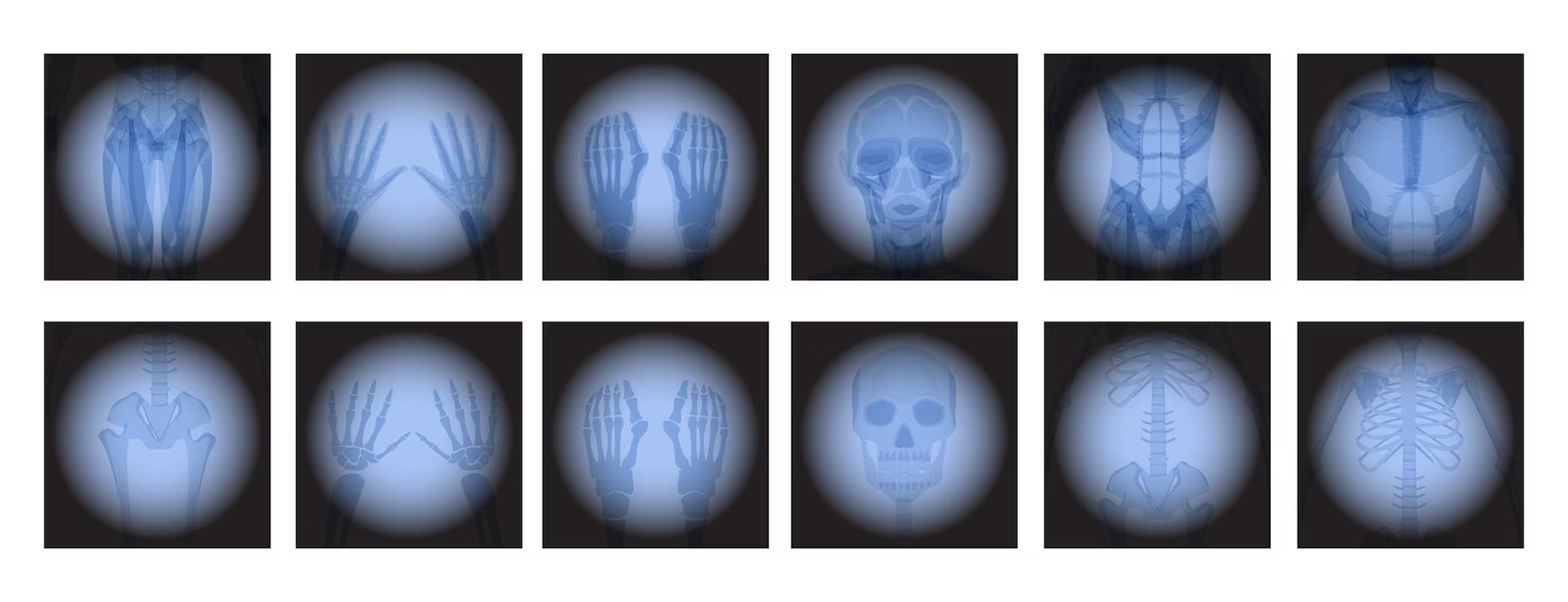
Diagnostic Imaging: Nuclear Medicine uses radiopharmaceuticals that emit gamma rays or positrons to visualize and assess the function and structure of organs and tissues. These radiopharmaceuticals are typically administered intravenously, orally, or through inhalation. Specialized imaging equipment—such as gamma cameras or PET (Positron Emission Tomography) scanners—detects the emitted radiation and produces detailed images of targeted areas. This enables the identification and evaluation of a wide range of conditions, including cancer, heart disease, thyroid disorders, neurological disorders, and skeletal abnormalities.
-
Functional Imaging: Unlike other imaging methods that primarily provide anatomical information, Nuclear Medicine focuses on functional imaging. It examines how organs and tissues work, including metabolism, blood flow, and receptor interactions. By evaluating physiological processes within the body, Nuclear Medicine assists in early disease detection and provides valuable information for treatment planning and follow-up.
-
Therapeutic Procedures: In addition to diagnostic imaging, the Department of Nuclear Medicine also offers therapeutic procedures using radiopharmaceuticals. This field, known as Therapeutic Nuclear Medicine or Molecular Radiotherapy, involves the targeted delivery of radioactive substances to specific areas of the body—such as tumors or overactive thyroid tissue—to destroy or control diseased cells. Common therapeutic applications include treatment of thyroid cancer, bone metastases, and certain types of lymphoma.
-
Radioisotope Production: The department often plays a critical role in the production and quality control of radiopharmaceuticals. It may house a dedicated cyclotron or other radioisotope production facilities to generate the necessary radioactive materials used in diagnostic and therapeutic procedures. The department ensures safe transport, storage, and disposal of radioactive substances in accordance with regulatory guidelines.
-
Radiation Safety and Dosimetry: Due to the use of radioactive materials, radiation safety is of utmost importance in Nuclear Medicine. The department follows strict protocols to ensure the safe handling and administration of radiopharmaceuticals. Radiation protection measures minimize exposure to patients, staff, and the public. Dosimetry—calculating the radiation doses received by patients—plays a crucial role in optimizing treatment efficacy while minimizing potential side effects.
-
Research and Innovation: Nuclear Medicine departments often engage actively in research and development to advance the field. This includes exploring new radiopharmaceuticals, imaging techniques, and therapeutic approaches. Research efforts may focus on improving image quality, reducing radiation exposure, developing new radiotracers, or investigating novel therapeutic applications.
-
Multidisciplinary Collaboration: Nuclear Medicine departments work closely with other medical specialties—such as radiology, oncology, cardiology, and endocrinology—to provide comprehensive patient care. The integration of Nuclear Medicine findings with other imaging methods and clinical information supports accurate diagnosis, treatment planning, and monitoring of various diseases.
Our Mission
The mission of the Department of Nuclear Medicine is to provide a platform for the dissemination and discussion of the latest developments in nuclear medicine—including multimodality imaging and related fields—and to promote and coordinate the exchange of knowledge regarding the diagnosis, treatment, and prevention of diseases using open radioactive materials and stable nuclides in medicine.
Our Vision
- To be one of Türkiye’s leading nuclear medicine units, providing high-quality diagnostic and therapeutic services.
- To optimize and advance nuclear medicine science and education for the benefit of public health within the concept of personalized healthcare.
- To ensure equal access to nuclear medicine for all patients in need, aiming to serve every individual requiring nuclear medicine services.